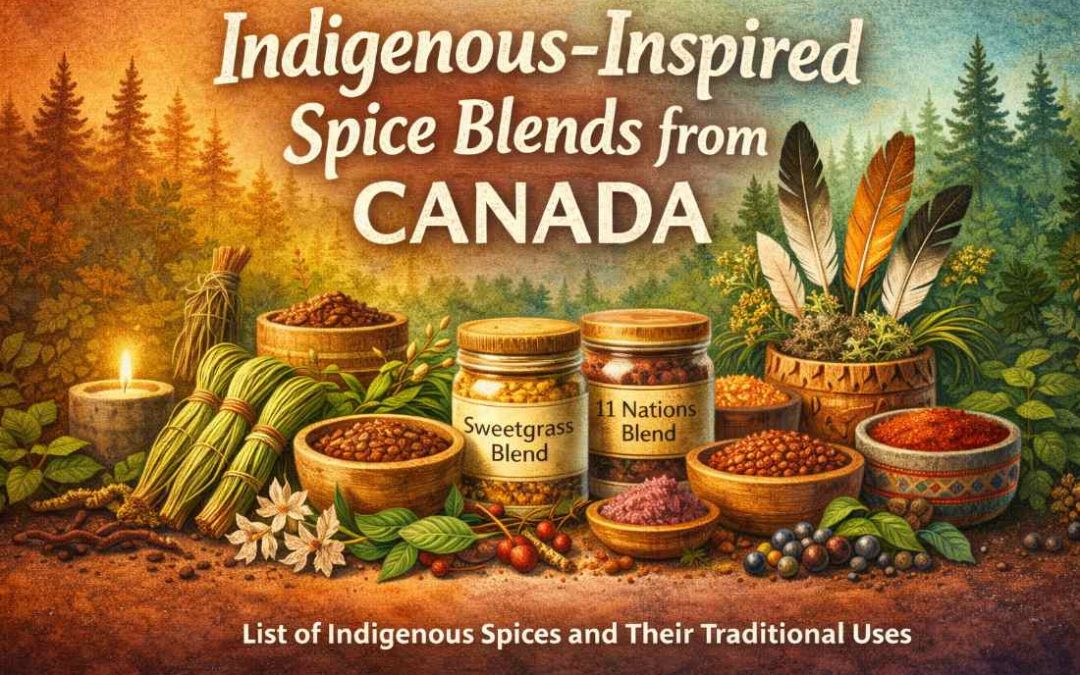
Across Canada, a quiet culinary renaissance is unfolding — one rooted not in novelty, but in deep time. Indigenous chefs, food entrepreneurs and knowledge keepers are reclaiming traditional plants, seasonings and preservation methods that long predate the modern pantry. The result is a growing market for Indigenous-inspired spice blends that do more than season food. They tell stories of land, migration, ceremony and survival.
For many Indigenous communities, spices are inseparable from landscape. Flavour comes from forests, shorelines and grasslands: berries dried in the sun, aromatic leaves gathered with care, resins and barks used sparingly and respectfully. These ingredients were never simply culinary. They were medicine, trade goods, spiritual tools and markers of identity. Today’s blends draw from that heritage while adapting to contemporary kitchens.
A Culinary Revival Grounded in Land
The renewed interest in Indigenous flavours is part of a larger movement to restore traditional food systems disrupted by colonisation. Indigenous chefs are leading the charge, blending ancestral knowledge with modern technique. Instead of treating Indigenous cuisine as a relic, they present it as a living, evolving culinary language.
Spice blends play a central role because they are portable expressions of place. A jar of seasoning can carry the scent of boreal forest or prairie grassland into urban kitchens. Ingredients such as juniper, wild sage, sweetgrass, sumac and Labrador tea reflect ecosystems that stretch across the country. These blends encourage cooks to think about where flavour originates — and whose knowledge made it possible.
The Indigenous culinary revival is increasingly recognised as a vital cultural movement. Organisations such as the Indigenous Culinary of Associated Nations support chefs working to preserve and share food traditions while promoting ethical sourcing and education:
Ethical Sourcing and Cultural Respect
One reason Indigenous-inspired spice blends resonate with consumers is their emphasis on ethical harvesting. Many producers work directly with Indigenous gatherers and small community businesses, ensuring that profits flow back to the people who steward these ingredients.
This matters because traditional plants are not commodities in the conventional sense. They are relatives within a living ecosystem. Harvesting practices are guided by protocols that prioritise regeneration and gratitude. Consumers increasingly value this approach, seeing it as an alternative to industrial spice supply chains that often obscure origin and labour conditions.
The broader conversation around Indigenous food sovereignty — the right of Indigenous communities to control their own food systems — has helped frame these products within social and environmental responsibility. The National Centre for Truth and Reconciliation highlights how restoring Indigenous knowledge systems, including foodways, is part of cultural healing and education.
Blends That Carry Stories
Unlike generic commercial rubs, Indigenous-inspired blends often arrive with context. Labels may reference the territory where ingredients are gathered, the Nation connected to a recipe, or the historical use of a plant. This storytelling transforms seasoning into cultural exchange.
Some blends focus on sweet-smoky profiles using maple sugar and dried berries. Others lean herbal and resinous, combining cedar, sage and juniper to complement fish or game. The flavours can feel both ancient and surprisingly modern — earthy, bright and layered rather than aggressively spicy.
For chefs, these blends offer creative possibilities. They pair beautifully with contemporary Canadian ingredients: Arctic char glazed with berry-juniper rub, roasted root vegetables tossed in wild herb seasoning, or bannock brushed with sweetgrass-infused butter. Home cooks find them equally versatile, adding depth to everyday dishes without overwhelming the palate.
A Bridge Between Communities
Perhaps the most powerful aspect of Indigenous-inspired spice blends is their role as bridges. They invite non-Indigenous Canadians to engage with food histories that are often absent from mainstream narratives. Cooking becomes a way of acknowledging the land’s first caretakers and learning about the plants that shaped regional diets for millennia.
This exchange is not about appropriation when done responsibly. It is about collaboration, credit and respect. Purchasing from Indigenous-owned producers, learning the stories behind ingredients and recognising the cultural significance of these foods are essential parts of participation.
As more Canadians seek meaningful connections to what they eat, these blends offer something rare: flavour tied to identity, ecology and resilience. They remind us that cuisine is not only about taste, but about memory and belonging.
Looking Forward
The growth of Indigenous-inspired spice blends signals a broader shift in Canadian food culture. Diners and home cooks alike are moving beyond imported trends toward flavours rooted in the landscapes they inhabit. This is not a passing fad. It is a rebalancing — a recognition that some of the country’s most exciting culinary ideas have been here all along.
As Indigenous chefs continue to lead innovation, spice blends will likely expand in complexity and reach. Yet their core purpose will remain unchanged: to honour relationships between people, plants and place. Every pinch carries a reminder that flavour is history you can taste.
List of Indigenous Spices and Their Traditional Uses
-
Sweetgrass – ceremonial herb used in teas and infusions; symbol of purification
-
Sage – cleansing plant used in cooking, medicine and ritual
-
Cedar – aromatic needles used to season fish and game; medicinal tea
-
Juniper berry – sharp, piney seasoning for meat preservation and flavour
-
Sumac – tart berry used as a souring agent in sauces and drinks
-
Labrador tea – brewed as a warming herbal beverage
-
Wild mint – digestive aid and bright herbal seasoning
-
Spruce tips – citrusy spring growth used in syrups and marinades
-
Wild fennel – aromatic seed used in broths and roasted dishes
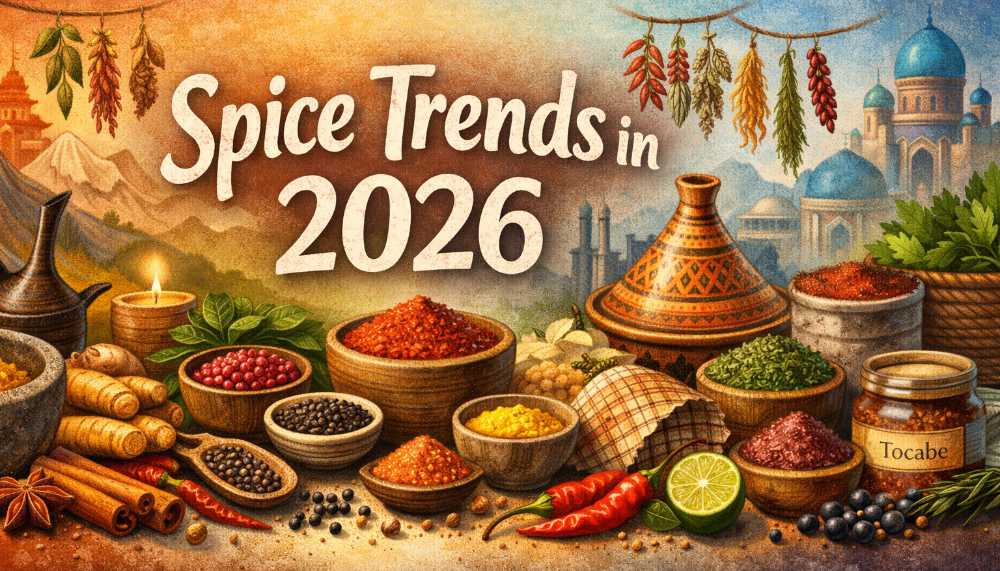
In kitchens from Vancouver to Halifax, 2026 is shaping up to be a landmark year for spice trends. As global palates continue to diversify and home cooks grow more adventurous, traditional seasonings are being reinvented, while novel spices from far-flung regions are finding their way into everyday meals. This year’s spice landscape reflects broader shifts in culinary curiosity, cultural fusion, and health-forward eating — and Canadian chefs and food lovers are at the forefront.
The Rise of Functional Flavours
One of the most notable trends of 2026 is the increasing demand for functional spices — seasonings that not only enhance flavour but also offer health benefits. Turmeric has long been touted for its anti-inflammatory properties, but this year it’s joined by allies such as ashwagandha, schisandra, and black seed (Nigella sativa). While these botanicals have roots in ancient traditions, their surge in popularity is backed by scientific interest in adaptogens and gut health. For reliable information on how herbs and spices interact with health, the Government of Canada’s own guidance on food additives and safety is a must-read: https://www.canada.ca/en/health-canada/services/food-nutrition/food-safety.html.
Consumers are becoming more intentional about what they add to their meals, seeking ingredients that contribute to mental clarity, balanced energy and overall wellness. This has driven up retail sales of spice blends specifically marketed for digestion, immunity and stress relief.
A Global Spice Passport
If 2025 was about dipping a toe into global flavour, 2026 is about diving in. Inspired by international travel and cultural exchange (both virtual and in-person), chefs and home cooks are exploring regions that have historically been underrepresented in North America’s culinary repertoire.
Take Ethiopian berbere, a vibrant red blend with chilli, korarima, and fenugreek, now showing up not just in injera but in roasted vegetables, soups and even cocktails. Filipino siling labuyo — a potent local chilli — is being paired with everything from tacos to tinned fish. Meanwhile, Uzbek baharat and Indonesian rempah are earning a second look, with home cooks mixing these into slow-cooked meats and grains. This trend aligns with the broader “global pantry” movement highlighted by the culinary experts at the James Beard Foundation, which champions diverse foodways and ingredient education: https://www.jamesbeard.org.
Food media and social platforms are amplifying this trend, with creators sharing step-by-step spice profiles, pairing guides and fusion recipe ideas that make unfamiliar flavours accessible.
Localism Meets Global Inspiration
While global spices are garnering attention, there’s also a strong pull toward local and sustainable seasoning options. Canadian producers and foragers are elevating homegrown herbs such as sweetgrass, sumac harvested from the prairies, and wild fennel from coastal regions. These local flavours are often blended with international spices to produce hybrid mixes that tell a story of place and heritage.
Farmers’ markets across Canada are bustling with artisanal spice vendors offering small-batch creations — think maple-smoked paprika or juniper berry and spruce tip blends. These combinations speak to a larger movement: connecting food with local ecology, supporting small producers, and embracing terroir in everyday cooking.
Heat, But With Nuance
Heat isn’t going anywhere in 2026, but it’s taking on more nuanced forms. The days of simply grabbing the spiciest chilli on the Scoville scale are fading; instead, cooks are paying attention to the flavour profile that heat brings.
Varieties like aji amarillo and piri piri balance fruity sweetness with moderate heat, making them versatile for sauces and marinades. Meanwhile, milder smoked peppers such as chile de árbol and pasilla are being used to deepen flavour in stews and grains without overwhelming the palate.
This nuanced approach extends to heat balances in everyday cooking. Restaurants in Toronto and Montreal report diners are now requesting spice levels that preserve the dish’s complexity rather than mute it under firepower.
Spice Blends with a Story
Another prominent trend is the proliferation of story-driven spice blends. Today’s consumers want to know not just what they’re eating, but why it matters. Blends inspired by personal narratives, traditional practices and ethical sourcing are resonating deeply.
For example, blends curated to honour Indigenous foodways are gaining traction on shelves and menus, often developed in partnership with Indigenous chefs and growers. These blends don’t merely provide flavour; they carry heritage and respect for traditional ecological knowledge.
Similarly, spice companies are being scrutinised for how they source ingredients, with transparency about fair wages, sustainable farming practices and carbon footprint becoming part of product narratives. This aligns with larger trends in conscious consumption and ethical eating.
Practical Tips for Spicing Up 2026
For home cooks eager to embrace this year’s spice trends, here are a few approachable ways to start:
-
Experiment slowly: Start by incorporating one new spice or blend into a familiar dish to understand its profile.
-
Build your own blends: Mix small amounts of complementary spices — for example, smoked paprika, ground cumin and a touch of cinnamon — for a balanced, smoky rub.
-
Store spices properly: Keep them in airtight containers away from heat and light to preserve potency.
-
Pair with purpose: Think about what you want a spice to do — add brightness, heat, earthiness — rather than just taste hot.
Looking Ahead
Spice trends in 2026 reflect a broader cultural shift toward mindful eating, inclusivity and flavour curiosity. Whether you’re drawn to the functional benefits of adaptogens, the vibrant palette of global seasonings or the grounded richness of local herbs, there’s never been a more exciting time to experiment with spices.
From humble home kitchens to high-end restaurants, the spice revolution is in full swing — and it’s adding depth, diversity and connection to every dish it touches.
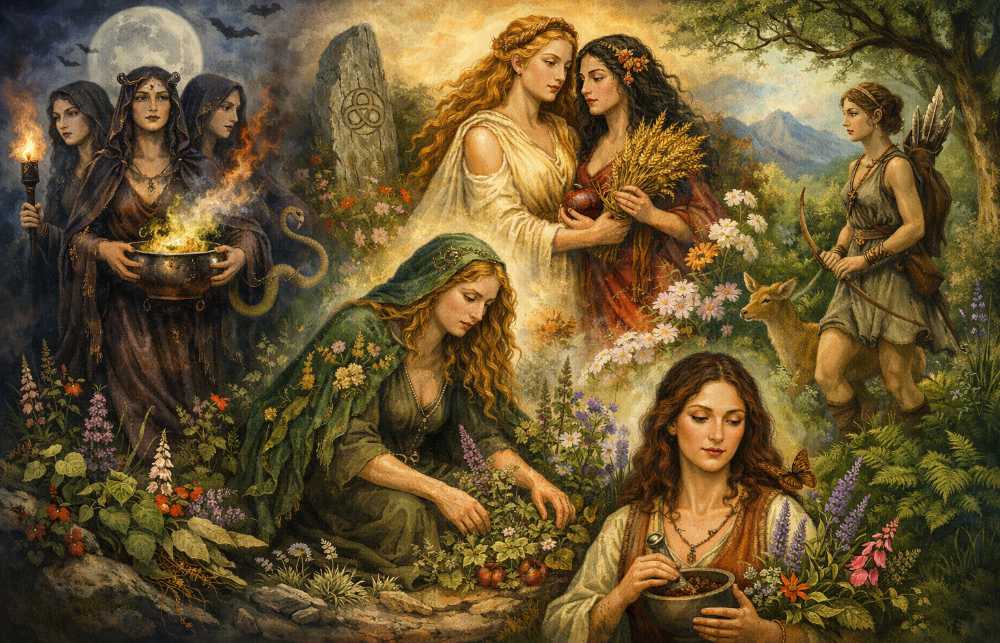
Green Goddesses in Literature and Art
Long after temple worship faded, the goddesses of herbs survived in a different sanctuary: the imagination of artists and writers. Their stories proved too rich to abandon. Across centuries, painters filled canvases with symbolic plants, poets wove botanical metaphors into verse, and novelists revived ancient figures as emblems of healing and wild knowledge.
What emerges from this creative afterlife is a recurring fascination with women who understand plants — not as decoration, but as power. These goddesses carry medicine, danger, fertility and memory in their hands. In art and literature, herbs become a language through which entire cultures wrestle with the meaning of nature.
Hecate and the Aesthetics of Darkness
Hecate’s artistic legacy is inseparable from mystery. In Shakespeare’s Macbeth, She appears as the hidden authority behind the witches, presiding over their herbal brew. The cauldron scene is thick with plant imagery: roots, seeds and toxic growths mingle into a potion that feels both medicinal and catastrophic. Shakespeare’s audience would have recognised the unsettling truth beneath the spectacle — that herbal knowledge could heal or destroy depending on the hand that wielded it.
Visual artists later embraced this ambiguity. William Blake’s haunting painting The Night of Enitharmon’s Joy (1795), often associated with Hecate-like symbolism, presents a triple-faced female figure surrounded by nocturnal forms. Though not labelled explicitly as Hecate, the imagery echoes her domain: shadow, crossroads and secret wisdom. Plants appear twisted and dreamlike, suggesting an herbal world beyond rational control.
In the 19th century, Symbolist painters frequently invoked her presence indirectly. The French artist Stéphane Mallarmé wrote poetry steeped in Hecatean atmosphere, where flowers and herbs feel charged with occult meaning. The goddess becomes less a character than a mood — a reminder that nature has a hidden vocabulary.
Airmed and the Art of Remembering
Airmed’s myth — herbs springing from grief — has quietly influenced Irish literary culture. During the Celtic Revival, writers such as W. B. Yeats explored the tension between lost knowledge and cultural survival. While Yeats rarely named Airmed directly, his poetry often returns to the idea of wisdom scattered and imperfectly reclaimed, a theme that resonates with her story.
Contemporary Irish artists have taken a more literal approach. The painter Jim Fitzpatrick, known for mythological and Celtic subjects, has produced works inspired by Tuatha Dé Danann figures, portraying them amidst intricate botanical detail. In these visual interpretations, plants are not background scenery; they are luminous carriers of memory.
Airmed’s presence in modern eco-literature is particularly striking. She has become a symbol for environmental fragility — a figure who embodies knowledge humanity cannot afford to lose. Poets invoke her when writing about disappearing species, turning her cloak of herbs into a metaphor for biodiversity itself.
Demeter and Persephone: The Botanical Cycle on Canvas
Few myths have generated as much plant-rich imagery as the story of Demeter and Persephone. Their narrative — descent, return and seasonal rebirth — offers artists a ready-made structure for exploring nature’s rhythms.
Dante Gabriel Rossetti’s Proserpine (1874) is one of the most famous interpretations. Persephone stands in shadow holding a pomegranate, surrounded by ivy. The plant is not incidental. Ivy symbolises persistence and entanglement, mirroring her captivity. Victorian audiences, fluent in floral symbolism, would have read the painting as a meditation on growth constrained but never extinguished.
Frederic Leighton’s The Return of Persephone (1891) shifts the mood toward release. Flowers spill across the composition as she rises, suggesting that plant life itself celebrates her return. Here the goddess becomes indistinguishable from the landscape; she is the season incarnate.
Demeter, often painted with wheat and medicinal herbs, appears as civilisation’s green architect. In many neoclassical works, artists place cultivated plants alongside wild growth, quietly acknowledging that agriculture and healing once shared the same botanical roots.
Artemis and the Feminine Wilderness
Artemis represents another artistic current: the woman aligned with untamed landscapes. Classical sculptures show her striding forward, animals and forest plants carved at her side. These vegetal details signal that she belongs to ecosystems beyond human control.
Romantic painters expanded this theme dramatically. Théodore Chassériau’s Diana Surprised (1840) situates Artemis within dense foliage that feels alive with motion. The surrounding herbs and trees are not passive scenery; they seem to protect her, reinforcing her identity as guardian of wild spaces.
In modern literature, Artemis frequently appears in feminist reinterpretations. Novelists recast her as an emblem of bodily autonomy and ancestral knowledge, linking her to midwives and herbal healers pushed to society’s margins. The forest becomes a site of alternative authority — a place where plant wisdom survives outside institutional power.
The Persistent Image of the Herbal Woman
Across centuries of art and literature, these goddesses converge into a single enduring figure: the herbal woman. She stands at the threshold between culture and wilderness, holding knowledge both intimate and unsettling. Painters render her surrounded by symbolic plants; writers give her a voice that speaks in roots and leaves.
What keeps this archetype alive is its adaptability. In Gothic tales, she becomes the witch. In pastoral poetry, the healer. In environmental art, the guardian of fragile ecosystems. Each era reshapes her to reflect contemporary anxieties about nature, medicine and control.
Yet the core image remains constant. She is the reminder that human life has always depended on careful attention to plants — their cycles, their dangers, their gifts. By returning again and again to herbal goddesses, artists and writers acknowledge a truth older than myth: the green world is not a backdrop to history, but one of its central characters.
And in galleries and libraries, the goddesses continue their quiet work, keeping botanical memory alive in pigment and prose.

From the mist-shrouded hills of Ireland to the olive groves of ancient Greece, the myths of many cultures celebrate goddesses who embody the spirit of plants, especially herbs. These deities were more than just mythical figures — they stood at the intersection of nature, medicine and magic, representing the powerful, often mysterious relationship between humans and the plant world.
But what exactly makes a goddess of herbs? It isn’t simply a matter of gardening prowess. These divine figures symbolise an ancient understanding of herbal wisdom — knowledge of how plants can heal, harm, or transform the human body and spirit. In a world before modern pharmacology, herbs were medicine, food, perfume and magic. And tucked into the stories of old are countless goddesses whose realms included these living medicines.
Hecate: Sovereign of Plant Lore and Mysteries
Perhaps one of the most evocative figures associated with herbs is Hecate, the Greek goddess of magic, crossroads and the night. Far from being a benign garden spirit, she embodies the wild, liminal edges of nature — the places where medicinal and poisonous plants can grow side by side. Ancient lore credits her with teaching the arts of concocting potions, medicines and poisons, instructing practitioners in the power of herbs like mandrake, belladonna and aconite.
Her connection to garlic — used in antiquity both for protection and healing — and other plants reflects her dual nature as a deity of both healing and danger. Hecate’s gardens are not neatly ordered like kitchen herb beds, but wild and unpredictable, filled with potent plant power for those bold enough to seek it.
Such stories remind us that in many ancient worldviews, healing and harm existed on a spectrum. The same herb might cure a fever at one dose and bring death at another. A goddess like Hecate was revered precisely because she understood this delicate balance.
For more on Hecate’s plant associations, see this detailed source on her links to herbal knowledge.
Airmed: Ireland’s Mistress of Medicinal Plants
In the lush landscapes of Ireland, Airmed occupies a unique and poignant role in myth. As one of the Tuatha Dé Danann, the supernatural ancestors of the Irish, she was deeply connected to healing and the knowledge of herbs. According to legend, after her brother Miach was slain, Airmed wept over his body. From her tears sprang every healing herb in existence — 365 in all, representing every part of the human body and every possible cure.
With loving care, she laid these herbs out on her cloak and catalogued their properties. But her father, jealous and fearful of such wisdom, scattered them across the earth. This myth explains why humans can never fully master the secrets of herbalism — only Airmed holds the complete knowledge.
That story captures something timeless: the sense that the essence of true healing is mysterious and perhaps only partially accessible to mortals. In folklore, Airmed has come to symbolise the soul of herbal healing, a guardian of plant lore whose knowledge cannot be lost.
For more on Airmed’s story
The Greek Daughters of Healing: Panacea and Her Sisters
Not all plant-linked goddesses were solitary figures perched on distant hills. In Greek myth, the daughters of Asclepius — the great god of medicine — collectively represent aspects of healing itself, with strong ties to plant medicine. Among them is Panacea, whose very name endures in the modern word for a universal cure. She was thought to possess an herb capable of healing any ailment, an idea that speaks to humanity’s deep longing for comprehensive, natural remedies.
Her sisters, such as Hygieia (health and cleanliness) and Iaso (healing), flesh out a broader picture of Greek attitudes toward wellness, where herbs and plant-based remedies were central to the art of healing. This interweaving of divine metaphor and medical practice shows how deeply herb lore was embedded in ancient culture.
Other Goddesses in the Garden
Across cultures, the idea of plant-linked deities appears again and again:
• Artemis, the Greek huntress, was associated with wild herbs of the forest, including dittany — a plant believed to draw arrows from wounds.
• Demeter, goddess of agriculture, oversaw the growth of grain and other cultivated plants, some of which had medicinal uses in folk remedies.
• In Roman myth, Flora, goddess of flowers and spring, presided over the bloom of herbs and plants that sustained life and health.
• Norse mythology’s Eir embodies healing and is often portrayed as a benevolent figure tied to restorative practices.
• Many other cultures — from Yoruba traditions to Baltic folklore — ascribe plant-linked powers to female spirits and goddesses, emphasising the universal resonance of women and nature in myth.
While not all these figures are strictly “herb goddesses” in the narrowest sense, they reflect a widespread mythological theme: the belief that the earth’s healing powers are guided by divine feminine forces.
Why These Myths Still Matter
In an age of scientific medicine, the idea of a goddess of herbs can seem quaint or symbolic. Yet these ancient stories capture something essential about the human relationship with nature: respect, curiosity and sometimes awe before the hidden forces of plant life. Herbs aren’t just chemical compounds; in many cultures they were — and are — seen as living allies, with spirits or deities guarding their secrets.
Whether you’re a gardener, herbalist, historian or simply a lover of myth, these stories invite us to consider the deep roots of plant wisdom and the ways in which we continue to seek healing from nature. In the old tales, goddesses aren’t just mythical figures — they are reminders that the world of plants is mysterious, potent and fundamentally intertwined with human life.
🌿 Greek tradition
Hecate — Goddess of witchcraft, crossroads, and herbal magic
Associated with poisonous and medicinal plants. Ancient herbalists invoked her in spellwork and pharmakeia (plant medicine + magic).
Demeter — Agriculture and cultivated plants
Not specifically herbs, but guardian of plant cycles, fertility, and grain — she represents the domestication of useful plants.
Artemis — Wilderness and women’s healing
Linked to midwifery and protective herbs used in childbirth.
Persephone — Spring growth and plant rebirth
Symbolizes seasonal regeneration — the hidden life of roots and bulbs.
🌱 Roman tradition
Flora — Flowers and blossoming plants
Patron of spring blooms, perfumes, and flowering herbs.
🍃 Celtic traditions
Brigid (Brighid) — Healing, poetry, and sacred wells
Strongly tied to herbal healing and folk medicine. Many Irish herbal charms invoke her.
Airmed — Celtic goddess of herbal knowledge
According to myth, all healing herbs sprang from her tears. She catalogued every plant’s medicinal use.
🌺 Norse tradition
Eir — Goddess of healing
Sometimes described as the greatest physician among the gods. Associated with medicinal knowledge, likely including herbs.
🌼 Egyptian tradition
Isis — Magic and healing
Used divine herbal knowledge to resurrect Osiris and cure poison. Egyptian medicine blended plants and ritual.
🌾 Slavic tradition
Živa / Siva — Life and vegetation goddess
Linked to growth, greenery, and life force
Upgrading a restaurant menu usually starts because something isn’t working the way you want. Maybe the dishes feel outdated. Maybe the execution is all over the place between shifts. Or the kitchen is stretched too thin to support more complex options. Sous vide cooking gives operators a practical way to rebuild a menu without adding chaos to the back-of-house. You get control, predictable results, and the freedom to introduce new items that would be too time-consuming or inconsistent using traditional methods. When the goal is a cleaner, more dependable menu that performs every day, sous vide becomes one of the most useful tools available.
Uneven cooking. Long ticket times. Food waste from overproduction. Inconsistency between shifts. When you look at how restaurants are trying to stabilize margins while still raising the quality of the food, sous vide fits into that conversation immediately. You’re controlling temperature with exact precision. You’re reducing the number of variables line cooks have to juggle during a rush. And you’re putting more reliability into dishes that need to taste the same on Tuesday afternoon as they do on Saturday night when the dining room is full.
Most operators start thinking about sous vide when they realize their current cooking workflow isn’t getting the results they want. Maybe steaks fluctuate too much. Maybe chicken dries out when the grill team gets overwhelmed. Maybe the prep crew is falling behind on high-labor dishes that need tight control. Using sous vide in a restaurant isn’t just about technique. It’s about finding places where you need more predictability and putting that predictability into the food itself.
One of the first benefits is consistency. When you cook in a controlled water bath, you set the exact temperature for each protein or vegetable. The food cooks to the same doneness every time. This removes a lot of stress from the line. You’re no longer checking by touch. You’re not guessing based on grill marks. The guesswork disappears. Steaks come out medium-rare without the back-and-forth. Fish holds its moisture. Chicken stays tender. In a restaurant where speed matters and mistakes cost money, removing that variability is a major upgrade.
Another important point is yield. Overcooking reduces usable product. When your margins are thin, losing part of a protein because it dried out or shrank too much becomes expensive. Sous vide significantly reduces shrink. You keep moisture inside. More plates get served from the same batch. You’re controlling both quality and cost. Lower waste and higher output are real financial advantages operators may notice once they switch over.
Sous vide expands what your menu can do. Some dishes take time, patience, and tight temperature control that is hard to manage during a dinner rush. Beef short ribs, pork belly, confit poultry legs, custards, and delicate sauces all benefit from long, slow, stable cooking. Doing that with a standard oven or stovetop means babysitting the food. Doing it sous vide means putting the food into a sealed bag, setting the temperature, and letting the process handle the rest. Prep becomes more predictable. Your team gains back hours of labor that would’ve been spent checking and adjusting.
When you think about remaking or upgrading a menu, sous vide helps you add high-quality items without stressing your staff. Restaurants can use sous vide to hold proteins at safe temperatures for service, meaning you can finish them quickly when the order comes in. This is ideal for busy service environments. It’s also ideal for smaller teams trying to deliver high-end plates without needing a large crew. You’re shifting the workload into a prep window, which is easier to manage.
There’s also the speed factor. Line cooks can finish a sous vide protein in a pan or under a broiler in under a minute or two. This reduces ticket backlog. It creates a smoother flow in the kitchen. When the water bath has already done the heavy lifting, the finishing step is short and controlled. This is why many restaurants use sous vide to stabilize signature items. They want to guarantee that busy nights don’t turn into stressful nights for the kitchen.
Now, consider how sous vide affects flavor. Because the food is sealed in an airtight bag, seasoning stays with the protein. Aromatics don’t escape. You get stronger natural flavors without needing heavy sauces to compensate. This helps when you want a clean, recognizable taste. A steak tastes like steak. Vegetables taste fresher. Proteins don’t dry out. Many restaurants use this advantage to simplify their menus without losing impact on the plate.
This leads into the question: how can sous vide impact a restaurant’s overall success? A sous vide company like Cuisine Solutions has built entire product lines around helping restaurants gain these advantages fast. Their ready-to-use sous vide items give operators the benefits without needing specialized equipment or training. Restaurants reduce prep time, stabilize quality across multiple locations, and add premium menu items that would take hours to make from scratch. Using pre-prepared sous vide proteins from a trusted supplier means you’re removing friction from your workflow. You’re also giving your kitchen staff more predictability. For restaurants trying to stay competitive, this kind of support changes how quickly they can refresh their menus and maintain consistency. Cuisine Solutions focuses on delivering this reliability at scale, which is why so many operators lean on their products when they want to deliver a better dining experience without increasing complexity.
Menu upgrades become easier because sous vide lets you rethink portions, plating, and timing. If you want to add a new steak option, for example, you don’t need to reinvent your workflow. You can test different temperatures and finishes until you find the version that fits your concept. If you’re adding a slow-cooked item, sous vide gives you the ability to run long cooking times overnight without heavy supervision. This becomes a major asset for restaurants that want to add depth and range to their offerings.
Sous vide also pairs well with modern menu strategies. Smaller menus. Focused signature items. Seasonal features. Because the technique gives you consistency, you can roll out limited-time dishes without overburdening your team. The prep work is done earlier in the day or even the day before. Your cooks only have to finish and plate.
Restaurants that adopt sous vide often find that their back-of-house runs smoother. There’s less chaos. Fewer mistakes. Higher confidence among the staff. Once the system is in place, the kitchen reacts faster to peak hours. The overall menu becomes more dependable.
If your restaurant wants to overhaul the menu, sous vide is one of the clearest ways to add new dishes, upgrade quality, and control costs at the same time. The technique gives you more predictability in cooking, stronger flavors, and tighter food safety. It also gives your team a clearer workflow. When you combine this with reliable sous vide products from partners like Cuisine Solutions, the process becomes even easier. You get the freedom to rethink your menu without adding stress to the kitchen. This is how restaurants stay competitive, by building systems that let them serve better food with less friction.

