
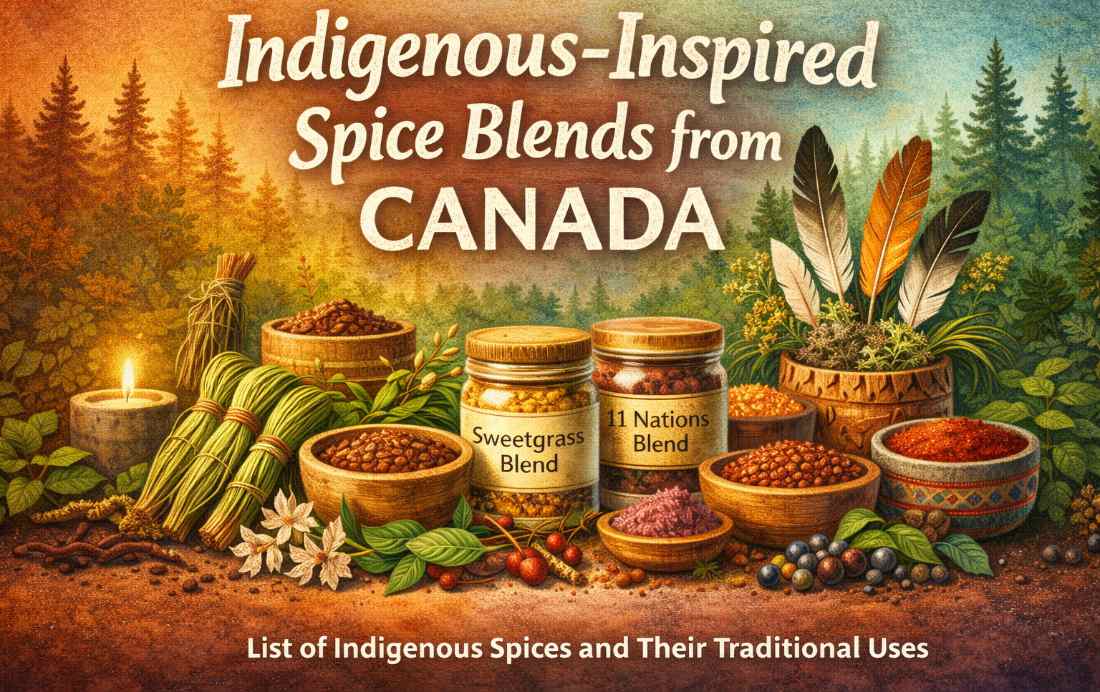
Across Canada, a quiet culinary renaissance is unfolding — one rooted not in novelty, but in deep time. Indigenous chefs, food entrepreneurs and knowledge keepers are reclaiming traditional plants, seasonings and preservation methods that long predate the modern pantry. The result is a growing market for Indigenous-inspired spice blends that do more than season food. They tell stories of land, migration, ceremony and survival.
For many Indigenous communities, spices are inseparable from landscape. Flavour comes from forests, shorelines and grasslands: berries dried in the sun, aromatic leaves gathered with care, resins and barks used sparingly and respectfully. These ingredients were never simply culinary. They were medicine, trade goods, spiritual tools and markers of identity. Today’s blends draw from that heritage while adapting to contemporary kitchens.
A Culinary Revival Grounded in Land
The renewed interest in Indigenous flavours is part of a larger movement to restore traditional food systems disrupted by colonisation. Indigenous chefs are leading the charge, blending ancestral knowledge with modern technique. Instead of treating Indigenous cuisine as a relic, they present it as a living, evolving culinary language.
Spice blends play a central role because they are portable expressions of place. A jar of seasoning can carry the scent of boreal forest or prairie grassland into urban kitchens. Ingredients such as juniper, wild sage, sweetgrass, sumac and Labrador tea reflect ecosystems that stretch across the country. These blends encourage cooks to think about where flavour originates — and whose knowledge made it possible.
The Indigenous culinary revival is increasingly recognised as a vital cultural movement. Organisations such as the Indigenous Culinary of Associated Nations support chefs working to preserve and share food traditions while promoting ethical sourcing and education:
Ethical Sourcing and Cultural Respect
One reason Indigenous-inspired spice blends resonate with consumers is their emphasis on ethical harvesting. Many producers work directly with Indigenous gatherers and small community businesses, ensuring that profits flow back to the people who steward these ingredients.
This matters because traditional plants are not commodities in the conventional sense. They are relatives within a living ecosystem. Harvesting practices are guided by protocols that prioritise regeneration and gratitude. Consumers increasingly value this approach, seeing it as an alternative to industrial spice supply chains that often obscure origin and labour conditions.
The broader conversation around Indigenous food sovereignty — the right of Indigenous communities to control their own food systems — has helped frame these products within social and environmental responsibility. The National Centre for Truth and Reconciliation highlights how restoring Indigenous knowledge systems, including foodways, is part of cultural healing and education.
Blends That Carry Stories
Unlike generic commercial rubs, Indigenous-inspired blends often arrive with context. Labels may reference the territory where ingredients are gathered, the Nation connected to a recipe, or the historical use of a plant. This storytelling transforms seasoning into cultural exchange.
Some blends focus on sweet-smoky profiles using maple sugar and dried berries. Others lean herbal and resinous, combining cedar, sage and juniper to complement fish or game. The flavours can feel both ancient and surprisingly modern — earthy, bright and layered rather than aggressively spicy.
For chefs, these blends offer creative possibilities. They pair beautifully with contemporary Canadian ingredients: Arctic char glazed with berry-juniper rub, roasted root vegetables tossed in wild herb seasoning, or bannock brushed with sweetgrass-infused butter. Home cooks find them equally versatile, adding depth to everyday dishes without overwhelming the palate.
A Bridge Between Communities
Perhaps the most powerful aspect of Indigenous-inspired spice blends is their role as bridges. They invite non-Indigenous Canadians to engage with food histories that are often absent from mainstream narratives. Cooking becomes a way of acknowledging the land’s first caretakers and learning about the plants that shaped regional diets for millennia.
This exchange is not about appropriation when done responsibly. It is about collaboration, credit and respect. Purchasing from Indigenous-owned producers, learning the stories behind ingredients and recognising the cultural significance of these foods are essential parts of participation.
As more Canadians seek meaningful connections to what they eat, these blends offer something rare: flavour tied to identity, ecology and resilience. They remind us that cuisine is not only about taste, but about memory and belonging.
Looking Forward
The growth of Indigenous-inspired spice blends signals a broader shift in Canadian food culture. Diners and home cooks alike are moving beyond imported trends toward flavours rooted in the landscapes they inhabit. This is not a passing fad. It is a rebalancing — a recognition that some of the country’s most exciting culinary ideas have been here all along.
As Indigenous chefs continue to lead innovation, spice blends will likely expand in complexity and reach. Yet their core purpose will remain unchanged: to honour relationships between people, plants and place. Every pinch carries a reminder that flavour is history you can taste.
List of Indigenous Spices and Their Traditional Uses
-
Sweetgrass – ceremonial herb used in teas and infusions; symbol of purification
-
Sage – cleansing plant used in cooking, medicine and ritual
-
Cedar – aromatic needles used to season fish and game; medicinal tea
-
Juniper berry – sharp, piney seasoning for meat preservation and flavour
-
Sumac – tart berry used as a souring agent in sauces and drinks
-
Labrador tea – brewed as a warming herbal beverage
-
Wild mint – digestive aid and bright herbal seasoning
-
Spruce tips – citrusy spring growth used in syrups and marinades
-
Wild fennel – aromatic seed used in broths and roasted dishes
